Choosing a Chinese aerospace fixture manufacturer requires more than comparing prices and catalog images. Aerospace Fixtures support drilling, assembly, inspection, and repeatable positioning, so small errors can affect an entire production process. A reliable supplier should demonstrate practical experience with titanium, aluminum, composites, and heat-resistant alloys. Ask how they control distortion, clamping force, surface protection, and dimensional stability during repeated use.
Evidence matters most. Request material certificates, inspection records, calibration documents, and sample coordinate measurement reports. Confirm whether the factory operates under AS9100 or ISO 9001 quality procedures, but do not rely on certificates alone. Visit the production site when possible. Observe machining cleanliness, gauge storage, revision control, and how workers handle nonconforming parts. Details matter. Ask for evidence.
A capable manufacturer should explain tolerance decisions in clear engineering language. They should review your drawings, datum structure, loading conditions, and expected service environment before quoting. Check their ability to provide prototypes, fixture validation, maintenance support, and documented design changes. A low quotation may look attractive, yet it can hide weak inspection or unclear responsibilities. No checklist is perfect. Even experienced buyers can overlook communication delays, packaging risks, or small design assumptions. Use a staged evaluation with technical questions, reference projects, a controlled sample order, and measurable acceptance criteria. The best choice is not always the largest factory. It is the partner that consistently delivers traceable, stable, and usable fixtures for your actual aerospace workflow.
China Top Aerospace Fixtures Manufacturers: How to Choose?
Aerospace fixtures are specialized tools for holding, positioning, and inspecting aircraft parts. They support drilling, assembly, welding, and dimensional checks. In China, their importance is increasing with aviation demand. The Civil Aviation Administration of China reported 619.6 million passenger trips in 2023. More aircraft production requires stable tooling, repeatable accuracy, and faster maintenance workflows. A fixture can prevent a small alignment error from becoming an expensive rework problem. Deloitte’s 2024 Global Aerospace and Defense Industry Outlook also highlights production growth and supply-chain resilience as major industry priorities.
Choosing a manufacturer requires more than comparing prices. Check its experience with aluminum structures, composite panels, and tight-tolerance inspection. Ask for calibration records, material certificates, and documented quality procedures. ISO 9001 helps, but it does not replace process knowledge. In real production, I have found that communication delays can damage schedules more than machining errors. This point is easy to underestimate. A supplier should provide clear drawings, revision control, trial fitting, and traceable inspection reports. The fixture should also allow practical access for operators and measuring equipment.
Tips: Request a sample quality plan before signing. Confirm tolerance capability with actual test data. Review maintenance support and replacement-part lead times. Do not select a supplier only because its workshop looks modern. A strong fixture must perform repeatedly on the factory floor.
Material selection is a key factor when choosing aerospace fixture manufacturers in China. Aluminum alloys are lightweight and suitable for general positioning fixtures, while titanium and nickel alloys provide higher strength and temperature resistance for demanding aerospace applications. The tensile-strength values shown are representative minimum or typical values from commonly referenced aerospace material specifications and can vary by heat treatment, product form, and applicable standard.
China Top Aerospace Fixtures Manufacturers: How to Choose?
Aerospace fixture manufacturers produce more than simple holding frames. Common types include drilling fixtures, milling fixtures, assembly jigs, welding fixtures, and inspection fixtures. Composite manufacturers also build lay-up molds and trimming tools. These fixtures control position, pressure, and repeatability during demanding production steps. According to Airbus’ Global Market Forecast 2023–2042, the industry may require 40,850 new aircraft over two decades. That forecast suggests sustained demand for accurate, durable tooling.
Manufacturers usually customize fixtures for fuselage panels, wing ribs, engine components, and cabin structures. Drilling fixtures guide holes with hardened bushings. Assembly jigs align large sections while technicians install fasteners. Inspection fixtures support coordinate measuring machines and laser trackers. A reliable supplier should explain material selection, tolerance control, calibration, and repair procedures. In my experience, a polished sample does not prove production capability. Ask for measurable evidence, such as repeatability records and first-article inspection results. Small details matter.
Tips: Match the fixture to the process, material, and part size. Request a clear tolerance plan. Check whether the design supports quick loading and safe access. Ask how worn locating pins are replaced. Airbus data is useful, but it does not replace a factory audit. A site visit may reveal inconvenient truths. That is valuable.
A practical comparison of common aerospace fixture categories, materials, capabilities, and selection criteria
| Fixture Type | Typical Aerospace Use | Common Construction Materials | Typical Accuracy Focus | Important Design Features | Best Selection Considerations |
|---|---|---|---|---|---|
| Assembly Fixtures | Positioning and joining fuselage sections, wing structures, doors, panels, and subassemblies. | Welded or machined steel frames, aluminum tooling plates, stainless-steel locating components, and polymer contact pads. | Stable datum references, repeatable locating, and controlled gap alignment throughout assembly. | Modular supports, adjustable clamps, locator pins, access windows, and ergonomic loading points. | Part size, assembly sequence, accessibility, load distribution, changeover frequency, and required repeatability. |
| Drilling Fixtures | Guiding drills for holes in airframes, brackets, ribs, skins, and structural components. | Tool steel bushings, hardened steel plates, aluminum bodies, and wear-resistant inserts. | Hole location, perpendicularity, bushing alignment, and repeatable edge distance. | Replaceable drill bushings, chip clearance, positive stops, lightweight handling, and anti-marring surfaces. | Hole pattern, drill diameter range, workpiece curvature, access limitations, and bushing replacement needs. |
| Milling Fixtures | Holding structural parts, brackets, machined aircraft components, and complex profiles during CNC machining. | Cast or machined steel, aluminum, tool steel, and engineered polymer contact elements. | Rigidity, low deflection, datum repeatability, and vibration control during cutting. | Balanced clamping, tool clearance, sacrificial surfaces, coolant drainage, and controlled workpiece distortion. | Cutting forces, material condition, thin-wall behavior, machine envelope, and number of machining operations. |
| Composite Layup Fixtures | Supporting molds, laminates, skins, spars, fairings, and other fiber-reinforced composite structures. | Low-expansion tooling materials, aluminum, steel, composite tooling boards, and high-temperature polymers. | Surface contour, thermal stability, laminate reference points, and dimensional consistency after curing. | Smooth release surfaces, vacuum-bag access, controlled thermal expansion, and non-damaging supports. | Cure temperature, vacuum requirements, coefficient of thermal expansion, release method, and expected production volume. |
| Inspection Fixtures | Holding components for dimensional inspection, coordinate measurement, optical scanning, and functional checks. | Granite or steel bases, stabilized aluminum structures, stainless-steel locators, and low-friction contact materials. | Datum integrity, measurement repeatability, thermal stability, and unrestricted probe or scanner access. | Kinematic locating, calibrated reference points, adjustable supports, and documented inspection positions. | Measurement method, uncertainty budget, part flexibility, environmental temperature, and calibration requirements. |
| Welding Fixtures | Holding brackets, frames, tubing, tanks, and metallic subassemblies during welding or brazing. | Heat-resistant steel, stainless steel, copper-alloy contact elements, and replaceable wear pads. | Joint alignment, weld shrinkage control, thermal distortion management, and repeatable fit-up. | Heat relief, grounding provisions, quick clamps, weld torch access, and replaceable contact surfaces. | Welding process, heat input, distortion risk, cycle time, operator access, and cleaning requirements. |
| Forming and Bending Fixtures | Forming sheet-metal skins, angles, channels, clips, and lightweight aerospace brackets. | Tool steel, hardened steel, aluminum, polyurethane pads, and replaceable forming blocks. | Bend angle, contour accuracy, springback compensation, and consistent feature location. | Controlled forming radii, positive stops, replaceable wear components, and smooth contact surfaces. | Material alloy and thickness, minimum bend radius, springback behavior, production quantity, and operator safety. |
| Functional Test Fixtures | Testing aircraft components, fluid systems, electrical assemblies, actuators, and mechanical interfaces. | Anodized aluminum, stainless steel, corrosion-resistant alloys, engineering plastics, and sealed fittings. | Interface alignment, leak prevention, sensor positioning, and reliable test repeatability. | Interchangeable adapters, safety guarding, pressure-rated connections, electrical isolation, and clear test status indicators. | Test medium, pressure or load range, electrical requirements, safety standards, data acquisition, and maintenance access. |
| Transport and Handling Fixtures | Moving, storing, protecting, and positioning large or sensitive aerospace parts between process stations. | Powder-coated steel, aluminum extrusions, stainless hardware, elastomer pads, and impact-resistant polymers. | Load stability, center-of-gravity control, interface protection, and repeatable docking. | Locking casters, lifting points, protective padding, adjustable supports, and clear load-rating labels. | Total weight, lifting method, floor conditions, corrosion exposure, storage duration, and protection against surface damage. |
China Top Aerospace Fixtures Manufacturers: How to Choose?
A practical evaluation starts with technical evidence, not a polished website. Ask for drawings, tolerance records, material certificates, and inspection reports from similar aerospace fixtures. Review whether the manufacturer understands datum control, repeatability, thermal expansion, and safe clamping. These details affect assembly accuracy. Small errors can become expensive rework.
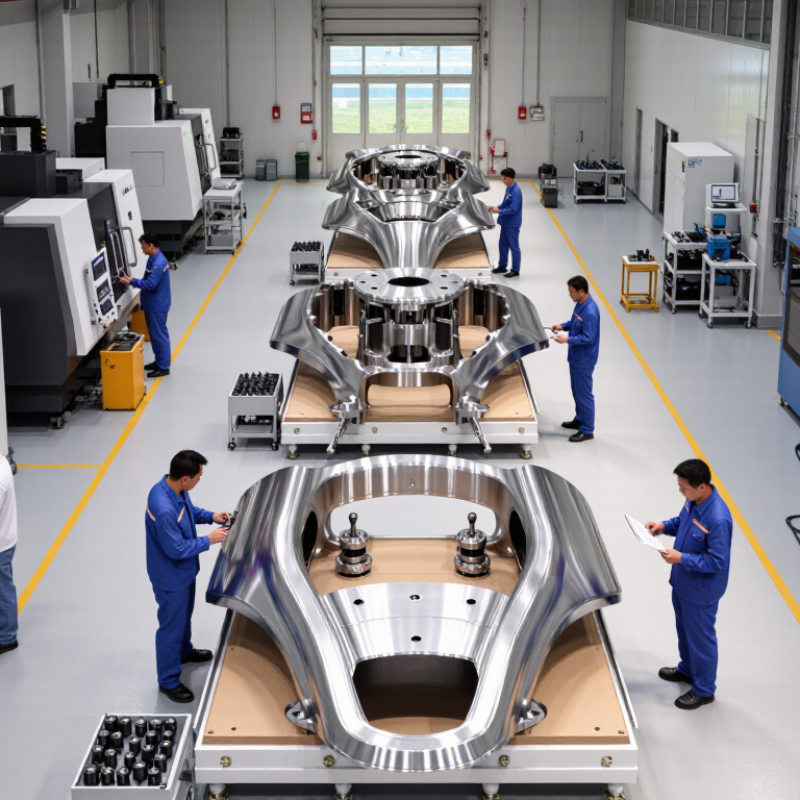
Visit the facility, if possible. Observe machining areas, calibration rooms, storage conditions, and fixture assembly practices. Confirm that coordinate measuring machines receive regular calibration. Check whether operators record torque values and inspection results. A reliable supplier should explain its quality system clearly, including corrective actions and document control. Certification such as AS9100 can support confidence, but certificates alone prove little.
Request a sample project or a controlled prototype. Compare its measured results with the approved drawing. Discuss lead times, engineering changes, packaging, and replacement parts before signing an agreement. Traceable materials matter. So does communication. A technically strong factory may still struggle with unclear English instructions or slow responses. That weakness deserves attention. No checklist is perfect. I would also examine how the team handles a failed inspection, because honest reporting often reveals more than impressive equipment. Choose a manufacturer that can provide stable process control, transparent records, and practical engineering feedback.
When choosing an aerospace fixture manufacturer, inspect quality systems before reviewing prices. Look for current AS9100 and ISO 9001 certification. Verify the certificate with the issuing body. A polished certificate is not proof of process control. Ask for material certificates, heat-treatment records, and full component traceability. For complex assemblies, request first article inspection reports aligned with AS9102. Confirm how the supplier controls revisions, nonconforming parts, and corrective actions. These details reveal daily discipline.
Technology matters because fixture accuracy affects assembly repeatability. Check whether the factory uses calibrated CMM equipment, laser scanning, and documented measurement plans. Five-axis machining can reduce setups and improve alignment, but only when operators understand datum structures and GD&T. Ask for inspection reports showing actual values, not only pass-or-fail statements. Review surface finish, hole position, flatness, and clamping-force controls. In practice, communication can still fail between design and production teams. A supplier may need better feedback loops. That weakness should be discussed openly.
Tips: Request a sample inspection package before placing an order. Visit the inspection area, not only the production floor. Check calibration labels and environmental controls. Ask how often measurement equipment is verified. Confirm packaging protects reference surfaces during transport. If possible, begin with a small trial fixture. It exposes unclear drawings, slow responses, and hidden process gaps early. Reliable suppliers explain limitations instead of promising perfection.
Selecting an aerospace fixture supplier requires more than comparing prices. Start by checking experience with tight-tolerance components, difficult alloys, and repeat production. Ask for inspection records, material certificates, and process capability data. A reliable manufacturer should explain how it controls distortion, surface damage, and dimensional changes after heat treatment. Their engineering team should also understand your drawing standards and revision control. Small details matter.
Tips: Request a sample inspection report. Review the supplier’s quality certifications and calibration system. Confirm whether measurements use CMM equipment when required. Ask how nonconforming parts are isolated and corrected. Visit the facility if the project is important. Look closely at work instructions, storage conditions, and operator training. A clean floor is useful evidence, but it is not proof of everything.
Communication often reveals more than a sales presentation. Send a realistic technical question and observe the response time and clarity. The right supplier will identify risks instead of promising everything immediately. Discuss lead times, fixture maintenance, packaging, and engineering changes before signing an agreement. I have seen schedules fail because maintenance responsibility was never defined. That mistake is easy to repeat. Price still matters, but unclear quality responsibilities can cost far more than the initial quotation. Perhaps the best choice is not the cheapest or largest supplier, but the one that documents its limits honestly.