China Top 10 Aluminium Parts Manufacturers?
China’s aluminium manufacturing sector serves automotive, electronics, machinery, construction, and renewable-energy markets. Its strongest suppliers combine alloy knowledge, modern equipment, and disciplined quality control. However, choosing among them requires more than comparing factory photographs or low quotations.
This guide examines ten leading Chinese Aluminium Parts manufacturers through practical criteria. These include die casting, CNC machining, extrusion, forging, surface finishing, tooling capability, and inspection systems. We also consider ISO certifications, material traceability, export experience, production capacity, and communication reliability. A supplier may produce excellent prototypes but struggle with high-volume consistency. Another may offer impressive tolerances but lack dependable packaging or delivery planning. Details matter.
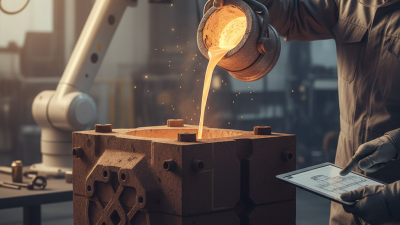
Casting specialist John Campbell states, “The quality of a casting is determined by the quality of the liquid metal.” This principle remains important for Aluminium Parts used near vibration, heat, pressure, or moving assemblies. Clean alloy preparation, controlled filling, and accurate inspection often matter more than promotional claims. Factory visits, sample testing, and third-party reports can reveal the difference.
Still, no ranking is universal. A manufacturer suited to automotive housings may not fit aerospace brackets or small electronic components. Prices also change with alloy grades, tooling, order volume, energy costs, and finishing requirements. This overview provides a useful starting point, not a final purchasing decision. Some information may require verification directly with each supplier. That is not a weakness. It is responsible sourcing.
China’s 41.6 Mt Primary Aluminium Output in 2023: Market Scope (IAI)
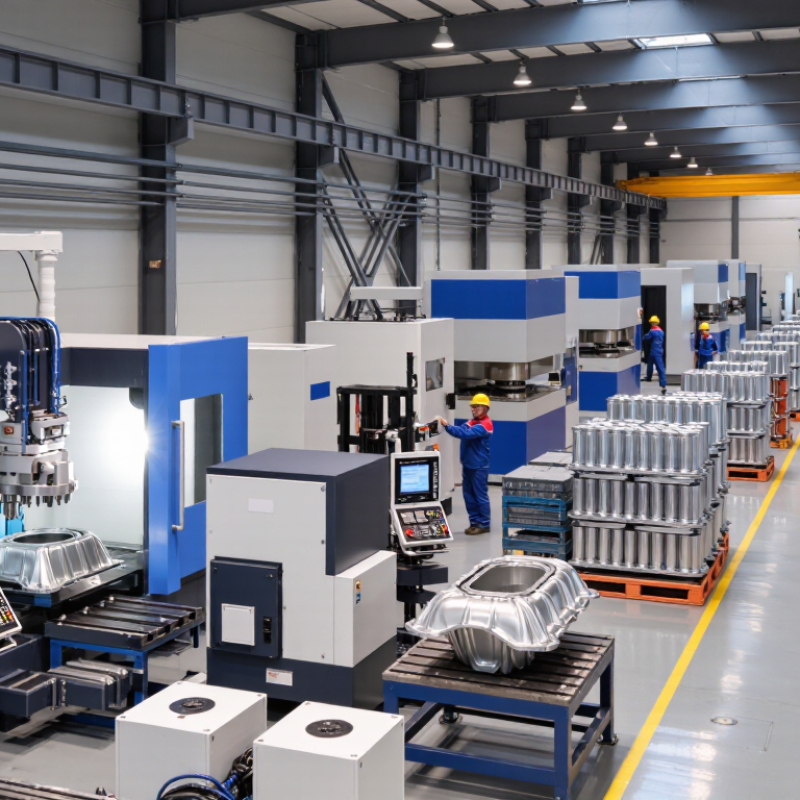
China’s primary aluminium output reached 41.6 million tonnes in 2023, according to the International Aluminium Institute. This scale gives aluminium parts manufacturers broad access to ingots, billets, and casting feedstock. It also supports competitive production for automotive, electronics, machinery, and industrial components.
However, output volume does not guarantee dependable parts. Experienced buyers should examine alloy consistency, melt control, heat treatment, machining accuracy, and surface protection. A reliable manufacturer can explain its process clearly, from furnace records to final dimensional inspection. Ask for material certificates, sample reports, and evidence of repeat production. Small details matter, such as burrs around a drilled hole or uneven anodizing near a sharp edge. These defects may seem minor, but they can affect assembly and service life.
Tips: Request a trial batch before approving mass production. Check critical dimensions with independent measurement equipment. Keep the request specific. Buyers should also compare energy use, scrap handling, and quality records, not only unit price. China’s aluminium capacity creates strong sourcing possibilities, yet I may be too optimistic if I judge suppliers by national output alone. Factory-level discipline remains the harder question.
China Top 10 Aluminium Parts Manufacturers? - China’s 41.6 Mt Primary Aluminium Output in 2023: Market Scope (IAI)
| Market Dimension |
2023 Data |
Unit |
Interpretation for Aluminium Parts Manufacturing |
| China primary aluminium production |
41.6 |
Million tonnes |
Indicates the scale of China’s upstream aluminium supply available to casting, extrusion, forging, machining and fabrication industries. |
| Global primary aluminium production |
70.6 |
Million tonnes |
Provides the global benchmark for assessing China’s position in the primary aluminium supply chain. |
| China’s implied share of global primary aluminium output |
58.9% |
Percentage |
Calculated as 41.6 ÷ 70.6; this highlights China’s strategic importance as a material sourcing and processing market. |
| Primary aluminium output outside China |
29.0 |
Million tonnes |
Calculated global output less China’s output; represents production from all other reporting regions. |
| China-to-rest-of-world primary output ratio |
1.43 : 1 |
Ratio |
China produced approximately 1.43 times the primary aluminium volume produced outside China in 2023. |
| Reporting period |
January–December 2023 |
Calendar year |
The figures represent full-year primary aluminium production rather than monthly capacity or shipment data. |
| Measured production stage |
Primary aluminium |
Upstream metal |
The data concerns aluminium smelter output and should not be interpreted as finished parts, components or fabricated-product output. |
| Relevant downstream processing routes |
Casting, extrusion, forging, rolling and machining |
Process categories |
These are common industrial routes through which primary or recycled aluminium can be converted into parts and assemblies. |
| Market-scope implication |
Large upstream supply base |
Qualitative assessment |
The production scale supports a broad ecosystem of material suppliers, processors, component manufacturers and export-oriented fabricators. |
| Manufacturer-ranking coverage |
Not included |
Scope limitation |
This table presents industry-level market data only and does not rank or disclose individual companies or brands. |
Source: International Aluminium Institute (IAI), 2023 primary aluminium production statistics. China’s share is calculated from the reported China and global production figures and may vary slightly due to rounding.
Ranking the Top 10: Capacity, IATF 16949, ISO 9001, Export and QA Data
China’s top ten aluminium parts manufacturers should be ranked by evidence, not factory size alone. A practical review examines annual casting capacity, machining lines, delivery performance, and customer sectors. It also checks whether reported figures come from audits, production records, or sales brochures.
The strongest candidates typically operate high-pressure die casting, CNC machining, deburring, and surface-treatment equipment under one quality system. IATF 16949 indicates automotive process control, while ISO 9001 supports broader quality management. Neither certificate guarantees perfect parts. That matters. Reviewers should inspect certificate scope, expiry dates, calibration records, and corrective-action history.
Export data adds another useful layer. A credible ranking compares shipment volume, destination coverage, customs consistency, and experience with technical documentation. Quality assurance should include incoming alloy inspection, spectrometer testing, first-article approval, CMM measurement, leak testing, and final sampling. Reject rates and response time deserve equal attention. Capacity can be misleading when utilization is low. Public data is often incomplete, and some manufacturers disclose only their best month. A careful ranking may therefore place a smaller supplier above a larger one when its traceability, audit results, and export reliability are stronger. Site visits remain valuable because photos cannot show whether inspection stations are active or merely displayed.
Top 10 Profiles: Casting, CNC, Forging, Extrusion, and Surface Finishing
A reliable China top-ten list should compare manufacturing strengths, not only factory size or export volume. The strongest profiles cover aluminium casting, CNC machining, forging, extrusion, and surface finishing. Each process suits different part requirements. Casting handles complex housings and internal channels. CNC machining delivers accurate holes, threads, and flat surfaces. Forging improves strength for brackets, shafts, and load-bearing components. Extrusion creates long, consistent sections with efficient material use.
Experienced suppliers usually show process records, inspection methods, and realistic tolerances. Look for pressure or gravity casting experience, five-axis machining capability, die design control, and profile straightness data. Surface finishing also deserves close attention. Anodizing may improve corrosion resistance, while powder coating supports colour consistency. A good supplier can explain thickness measurements, coating adhesion tests, and sampling procedures in plain language. That matters.
The best ten profiles may include specialists, integrated factories, and flexible mid-sized workshops. No manufacturer is strongest in every process. A casting expert may outsource anodizing, which can affect lead time and traceability. Ask for material certificates, first-article reports, dimensional inspection records, and sample parts before approving production. Check how engineers respond when drawings are incomplete. Honest questions are a useful signal. However, online rankings can mislead. Low prices may hide tooling limits, weak inspection, or unstable finishing quality. A practical evaluation should compare defect rates, communication speed, packaging details, and after-sales handling beside the quoted price.
Material Benchmark: 6061, 6063, 7075 and 95% Recycling Energy Savings (IAI)
China’s leading aluminium parts manufacturers should be judged by material control, not catalogue size. For 6061, buyers should verify temper, tensile strength, and traceability. This alloy suits brackets, housings, and machined frames. It balances strength, corrosion resistance, and practical cutting performance. 6063 offers cleaner extrusion surfaces and smoother anodizing. It fits trims, profiles, and visible architectural components. 7075 delivers much higher strength, but costs more and needs tighter heat-treatment control. The wrong alloy can waste both money and machining time.
Energy performance adds another benchmark. The International Aluminium Institute reports that recycling aluminium requires about 95% less energy than producing primary aluminium. That saving is significant. Yet, recycled content alone does not prove a lower footprint. Sorting, remelting, transport, and alloy separation still matter. A 6061 part mixed with 7075 scrap may create quality problems. Manufacturers should provide recycled-content declarations, furnace records, and batch-level chemical analysis. The International Energy Agency also identifies aluminium as a major industrial energy and emissions challenge, making process efficiency increasingly important.
In supplier audits, inspect surface defects, dimensional reports, and fatigue-test evidence. Ask whether machining chips return to a controlled recycling stream. Small details reveal real factory discipline. One weakness remains: public recycling claims are not always comparable. Buyers should request the calculation boundary and verification method before accepting impressive percentages.
Buyer Verification: Traceability, Tolerances, Capacity, Lead Time, and Audit Data
China’s top aluminium parts manufacturers should be compared through evidence, not catalog claims. The International Aluminium Institute reported about 70.6 million tonnes of global primary aluminium production in 2023. That scale increases material choice, but it does not guarantee stable machining. Ask for heat numbers, mill certificates, furnace records, and barcode links from incoming material to the final carton. Randomly verify one batch with a handheld alloy analyzer.
Tolerance evidence matters more than a confident sales reply. Request first-article inspection reports, CMM results, gauge calibration records, and capability data for critical dimensions. A drawing tolerance of ±0.02 mm needs process evidence, not only a final inspection stamp. ISO’s 2022 Survey recorded more than 1.2 million ISO 9001 certificates worldwide. Certification helps, but it cannot prove every production line performs consistently.
Capacity should be measured in available machine hours, not machine count. Request monthly output, current utilization, backup equipment, and confirmed subcontracting controls. For lead time, compare quoted days with the last three completed orders, including tooling, sampling, production, and export preparation. Audit the factory floor yourself or use an independent auditor. Check calibration labels, nonconforming-part cages, operator instructions, and shipment records. Small details expose weak systems. A perfect audit file can still hide a rushed batch. I would also challenge my own assumptions: low price may reflect efficiency, or simply missing inspection work.