Cmm Measurement Tips for Accurate Precision and Efficiency?
In the realm of precision engineering, CMM (Coordinate Measuring Machine) Measurement stands out as a vital process. Many manufacturing sectors rely on this technology to ensure product quality. According to a report by the National Institute of Standards and Technology (NIST), accurate dimensional measurements can reduce production errors by up to 30%. This statistic emphasizes the importance of getting CMM Measurement right.
Dr. Emily Carter, a leading expert in metrology, stated, “Precision is not just a goal; it’s a necessity.” This rings true in today’s competitive landscape, where even minor miscalculations can lead to significant setbacks. Many organizations struggle with calibration and measurement processes, highlighting a need for improved methods.
Common pitfalls include overlooking regular maintenance of equipment and improper training of personnel. These mistakes can compromise the effectiveness of CMM Measurement. Emphasizing the need for continuous learning and adaptation is crucial for improving measurement outcomes. By addressing these shortcomings, organizations can enhance both precision and efficiency, ensuring optimal performance in their operations.
Understanding CMM Measurement Principles for Precision
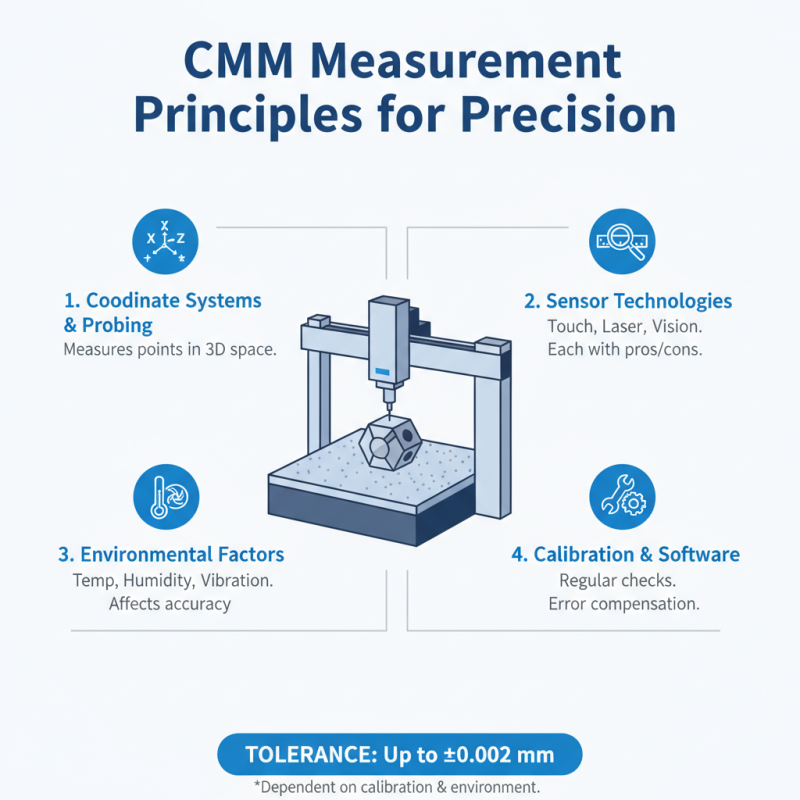
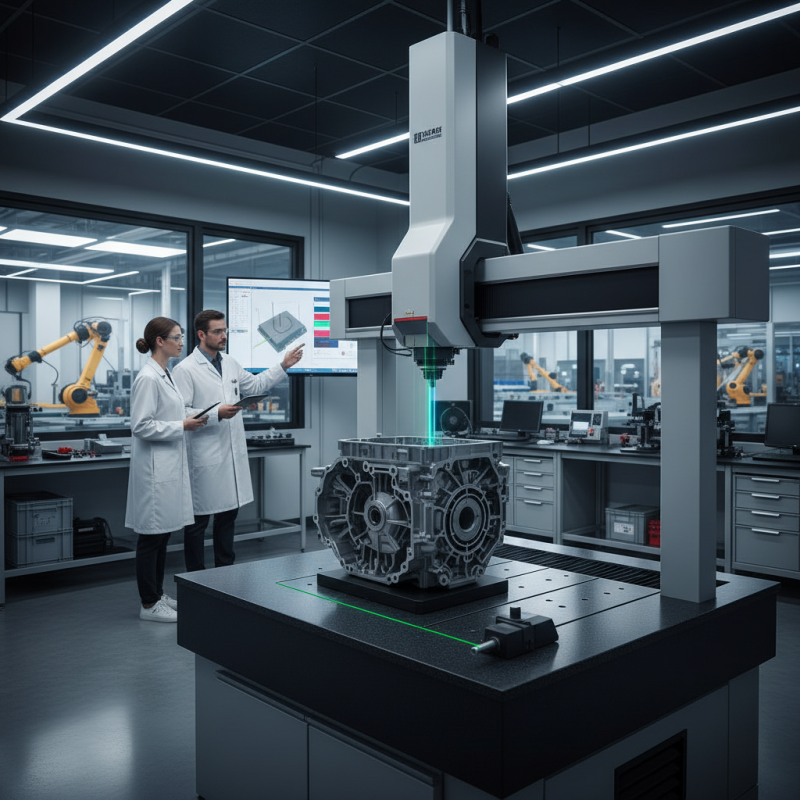
CMM, or Coordinate Measuring Machine, is vital for precision in manufacturing. Understanding its measurement principles is crucial for engineers. These machines can provide tolerances up to ±0.002 mm, depending on calibration and environment. Yet, achieving this accuracy is not always straightforward.
Proper setup greatly affects results. For instance, temperature fluctuations can cause measurement errors. Reports indicate that a 1°C temperature change can lead to ±0.001 mm deviation. Additionally, the alignment of the part being measured plays a significant role. Misalignment can introduce inaccuracies, leading to defects in production. Regular calibration and maintenance of equipment are essential but often overlooked.
Data analysis is another area needing attention. Many operators rely on intuition rather than statistical methods. For example, 35% of CMM users reported inconsistencies in measurements due to lack of data-driven decisions. Utilizing advanced software can enhance accuracy, yet many still hesitate. Continuous training and adaptation can bridge this gap. The pursuit of precision in CMM measurement is ongoing. It requires commitment to best practices and continuous improvement.
Key Factors Influencing CMM Measurement Accuracy
CMM measurement accuracy is influenced by various key factors. One significant aspect is the environmental conditions. Temperature changes can affect the materials being measured. A study by the National Institute of Standards and Technology indicates that a 1°C variance can lead to measurement errors of up to 0.002 mm. Such discrepancies can be critical when precision is paramount.
Another crucial factor is the calibration of the CMM itself. Regular calibrations ensure the machine remains within its specified tolerances. It's recommended to calibrate CMMs quarterly, as indicated by industry standards. Neglecting this might lead to unreliable results. Furthermore, operator skill plays a vital role. Inadequately trained staff may incorrectly position the probe, affecting data quality.
Lastly, the choice of probing technology impacts measurement results. Non-contact probes offer benefits in certain scenarios, but they can be less accurate than contact methods. The complexity of measuring various geometries requires a keen understanding. Professionals must continuously adapt their techniques to meet evolving standards. Seek feedback, and challenge conventional practices to improve accuracy.
Step-by-Step CMM Measurement Process for Efficiency
Accuracy in Coordinate Measurement Machine (CMM) use relies on a precise step-by-step approach. Understanding the measurement process enhances efficiency greatly. Start by ensuring your CMM is properly calibrated.
Regular calibrations are vital, as studies indicate that a poorly calibrated machine can lead to errors exceeding specifications by 10%. This highlights the importance of regular checks.
When performing measurements, maintain consistent environmental conditions. Changes in temperature or humidity can affect measurements reliability.
According to industry standards, keeping the temperature within 20-22°C improves precision. Additionally, always inspect your measurement probes and ensure they are clean.
Dirty probes can introduce significant inaccuracies.
Tip: Document every measurement and calibration step. This practice not only reflects on existing processes but helps in identifying patterns in potential errors.
Tip: Use reporting software that allows you to visualize measurement data. Visual aids can help spot inconsistencies quickly.
Remember, communication is key. Discuss findings with your team regularly. This reflection can lead to better outcomes.
Each measurement isn’t just a number; it's a story. Understanding the data and reflecting on errors is crucial. Small adjustments can lead to significant improvements.
Efficiency and precision go hand in hand in achieving optimal results.
Common Pitfalls in CMM Measurements and How to Avoid Them
CMM measurements are crucial for ensuring quality and precision in manufacturing. However, many users face common pitfalls that can lead to inaccurate results. One major issue is improper setup. A CMM must be aligned correctly before measurement. Rough surfaces or debris can introduce errors. According to a recent industry report, 30% of measurements are affected by environmental factors. This underlines the importance of a clean, controlled environment.
Another frequent mistake involves inadequate training. Operators must understand how to use CMMs efficiently. Lack of training leads to misinterpretations of data. Reports have shown that poorly trained operators can increase error rates by up to 40%. This is alarming, as precision is vital, especially in industries like aerospace and automotive.
One must also note the importance of software configurations. Many overlook the settings that can fine-tune accuracy. An incorrect configuration can skew results. Melting pot of issues like these hampers efficiency. Continual reflection and training are necessary to overcome these obstacles and enhance precision in CMM measurements. Strive for improvement, even in small steps.
Best Practices for Maintaining CMM Equipment for Optimal Performance
Maintaining CMM equipment requires attention to detail. Regular calibration is essential for accurate measurements. Calibration should occur frequently, especially after heavy usage. A drift in precision can occur if neglected. This might lead to costly errors and reworks.
Cleaning the CMM regularly is equally important. Dust and debris can affect sensor performance. Ensure that all moving parts are free from contamination. Lubricate joints and bearings to minimize wear. Over time, neglecting these tasks can reduce the equipment's lifespan.
Monitoring environmental conditions also plays a crucial role. Temperature fluctuations can impact measurement accuracy. It's crucial to keep the CMM in a stable environment. Vibration from nearby machinery should be minimized. Any of these factors, if ignored, can lead to frustrations and miscalculations.